Search This Blog

Showing posts with label military records. Show all posts

31 October 2016

"The Genealogist's Census Pocket Reference" by Allison Dolan


The Genealogist's Census Pocket Reference: Tips, Tricks & Fast Facts to Track Your Ancestors authored by Allison Dolan and the editors of Family Tree Magazine provides a small book to carry in your pocket, tote bag or Kindle. Yet, this small book provides resources for websites, enumerator questions, keys to abbreviations, explanations of special schedules, census resources and maps. The pocket reference covers the United States census years of 1790-1940 and 19 international countries.
Do you know, "The census was to record the population exactly as it was on the official census date. However, enumerators may have visited an address days or weeks after the official census date."
Why is this important? Birth or death dates were to be as of the official date. Births or deaths after the official date were not to be reported. Confusion about the dates or questions sometimes lead to errors.
Do you know that the departments of War and Navy enumerated military personnel separately, in what years and where are the records? For the answers, read pages 13 and148.
Do you know if your state has missing records, a state census or special schedules? For the answers, read pages 15-17, 122-134 and 136-140.

What makes this book unique?
  • pocket size
  • ease to carry, yet packed with material
  • specialized for census only
Dolan, Allison & editors of Family Tree Magazine. The Genealogist's Census Pocket Reference: Tips, Tricks & Fast Facts to Track Your Ancestors. Cincinnati: Family Tree Books. 2012. quote regarding census date from page 12.

This pocket reference covers all census areas from dates and maps to enumerator questions and instructions. The title describes to the reader what will be found inside; and, inside the reader will find every detail in the title; nothing has been left out. The material is ageless. Our census use and access is limited only to our imagination. This guide opens up our imagination by presenting the census completely and concisely.

Check area libraries, this book is available at the Gwinnett County Public Library, Georgia. Ask yourself, does this book help me advance towards my genealogy goals? Comments or questions, please contact Selma Blackmon, Thank you!

28 November 2013

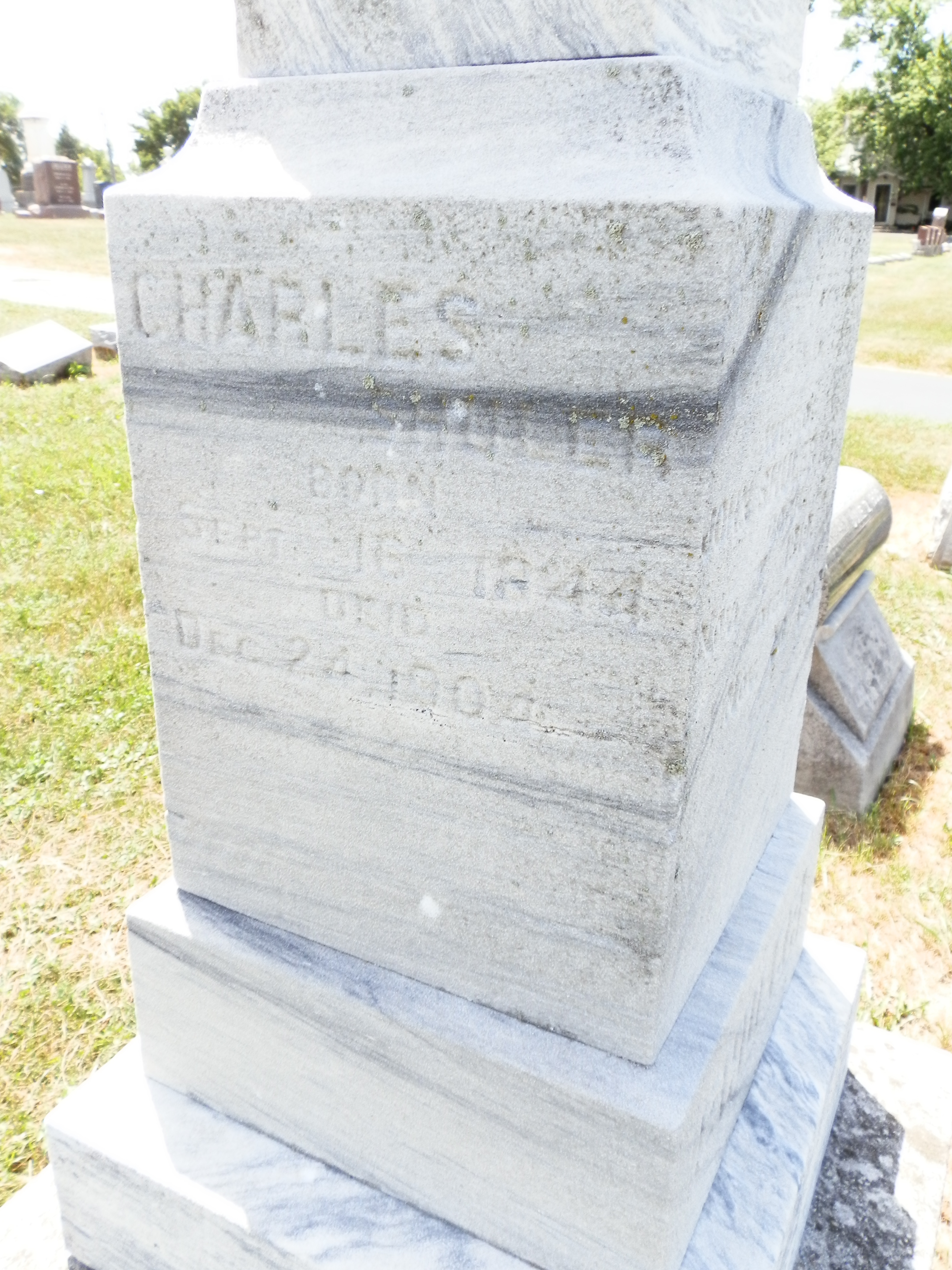
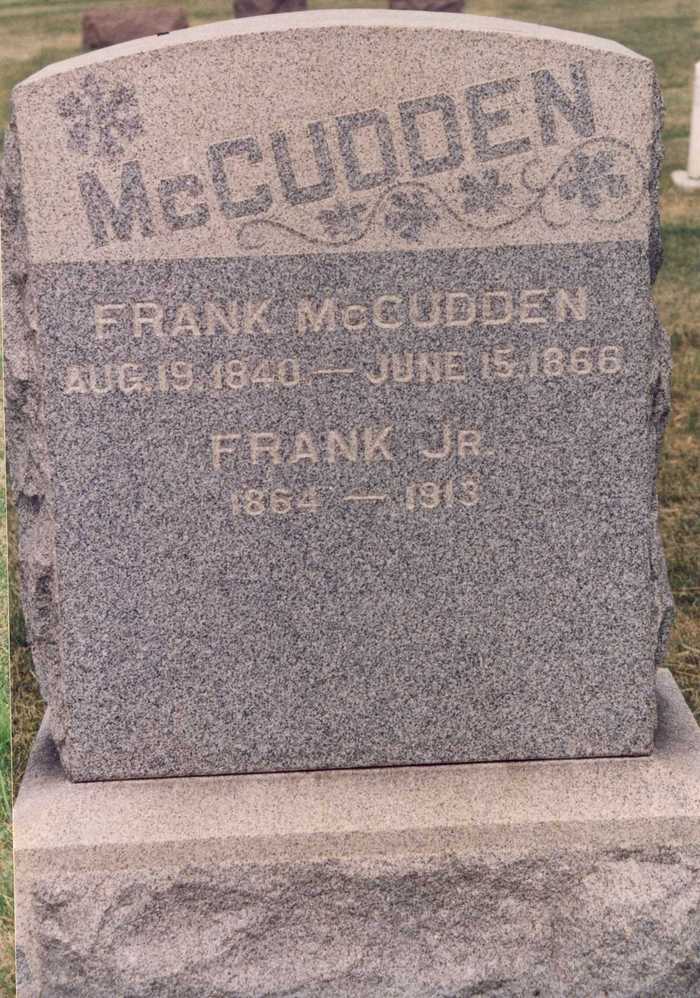
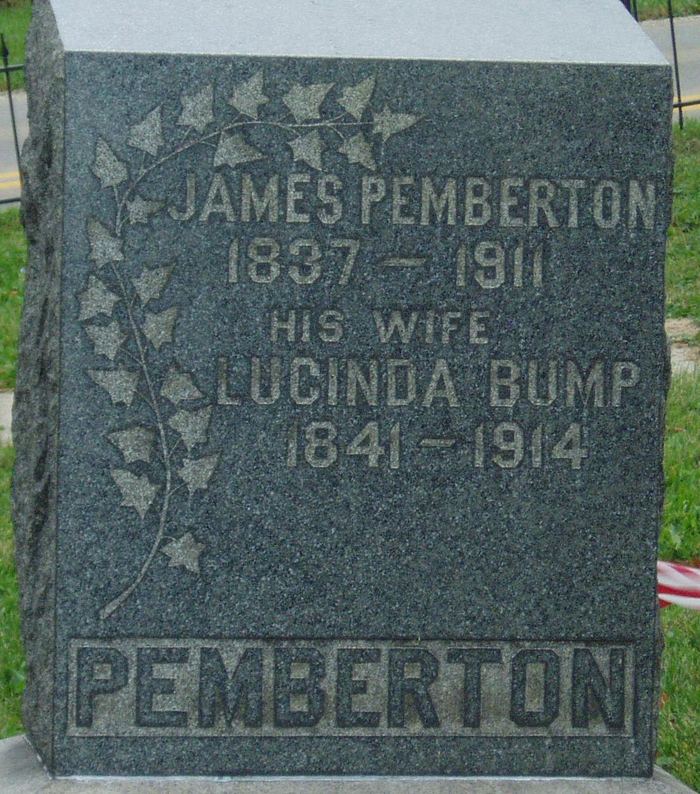
McCudden, Pemberton, and Schuler from Will County, Illinois served in the Civil War


Franklin McCudden (1840-66), James Pemberton (1837-1914) and Charles Shuler (1845-1904) from Will County, Illinois enlisted in Company I, 9th Illinois Cavalry on the 23rd of February 1865. They enlisted in Chicago, Cook County, Illinois. All three were mustered out on 31st day of October 1865 in Selma, Alabama. A National Genealogical Society (NGS)research trip to Washington DC provided me with documentation of their service.

After reading their Compiled Military Service Records, Carded Medical Records and Pension Applications, many more questions than answers surface. McCudden and Pemberton are farmers while Shuler is a boatman. Pemberton applied for a pension stating a mule rolled on him. At this time, there is no record in his medical file regarding the accident. Further research into unit records may reveal more clues.

The only military marker for Civil War service is on the grave on Charles Shuler in the Lockport City Cemetery. Franklin McCudden is buried in the Lockport City Cemetery. James Pemberton is buried in the Brooks Cemetery in Homer Glen. The gravestone photographs are from www.findagrave.com
What is the connection between these three men? Charles Schuler is the brother-in-law to Franklin McCudden. After Frank died, his wife Elizabeth married George Pemberton. What is George’s relationship to James? Future research, I mentioned that records offer more questions than answers.

For articles on Washington DC research or Civil War research, please read:


Contact me with your family history challenges, SelmaBlackmon

20 November 2013

Union Civil War documents for William Long, Frankfort, Will County, Illinois

Three types of records may exist for Union Civil War soldiers: compiled service records, carded medical records, and pension applications. The researcher should examine each type of record completely and separately before combining with the other two. Read the records several times; abstract or transcribe the information; make a timeline of the activities; analyze the information; write a report of the findings, both matching and contradictory; write further research plan.

Using Mr. William Long/Lange as my example, the following information was gleaned from his enlistment papers:
  • Name on enlistment William Lange, signed with a mark
  • Enlisted in the Civil War on January 21, 1864
  • Enlisted in Joliet, Will County, Illinois
  • Served in Company F, 64th Illinois Infantry
  • Mustered out July 11, 1865 in Louisville, Kentucky
  • Bounty paid $180; due $120
  • Clothing account $86.50
  • Rank private
  • Born in Germany
  • Age 18
  • Occupation farmer
  • Physical description hazel eyes, brown hair, light complexion, 5 ft 7 ½ in height
  • Resides in IL 6 District of Will County, Frankfort
  • Present during all muster roll call except July and August 1864 when sick and slight thigh wound
  • Wounded at the battle near Atlanta, GA on July 22, 1864 information of wound from 64 Regiment, 1 Brigade, 4 Division, 16 Corps dated July 23, 1864 and signed by Ag’d H.T. McDowell, Lt. Col. 39 Ohio Company, Index 26 No. 39

 Further research after abstracting the enlistment papers will include:
  • Who else from Frankfort joined the unit at the same time?
  • Use muster roll cards to follow company activities
  • July 22, 1864 battle near Atlanta, Georgia
  • Hospital records for wound and sickness
  • William Long and William Lange same person, reason for name changes

In the Carded Medical Records, every card is important. This information may substantiate or refute information in the Pension Application. Using Mr. William Long/Lange as my example, the following information was gleaned from his carded medical record:
  • 1864 March 12 – mumps, returned to duty 15 March, hospital 164, page 93
  • 1864 April 3 – catarrhs, returned to duty 4 April, hospital 58, page 99
  • 1864 July 22 – gunshot wound, admitted 22 July returned to duty 22 July, remarks, left thigh slight, Reg 598, hospital 141, page 116
  • 1864 July 22 – wound, thigh slight
  • 1864 July 30 – febrile remit, sent to G.H. [general hospital] 31 July, Illinois Reg’l, Reg, 593, hospital 193, page 117
  • 1864 Oct 9 – febrile remit, sent to G.H. hospital 11, page 123

 Further research after abstracting the Carded Medical Records will include:
  • Define abbreviations
  • Locate hospital records
William Long and Louisa, his widow, pension applications have too many gems to include in this article. More research!!!

15 November 2013

Genealogy: one set or one type of document does NOT tell the whole story


In genealogy, the researcher looks for as much documentation as possible and as close to the event date as possible. As with all documents, what is the history surrounding the event? Who provides the information? What is the age or physical/mental condition of the informant? One document does NOT tell the whole story!
 The Union Civil War Pension applications for James M. Son offer a great example of providing more questions than answers.

James M. Son filed two Union Civil War Pension applications Invalid No. 1142097 under the act of June 27, 1890 filed on December 20, 1892 and Invalid No. 1365582 under the act of February 6, 1907 filed on June 28, 1907.
The application similarities include:
            Enrolled from California, Missouri
            Born in Missouri
            Lived in Missouri
            Rejected on the grounds that the organizations were not in the U.S. service
 The application differences include:
Service Unit:
Company F, 43 Enrolled Missouri Militia
Legg’s Company, Provisional Enrolled Missouri Militia
Company A, 43 Enrolled Missouri Militia
Disability:
from throat trouble, partial deafness of both ears, catarrh of head, heart trouble, and rheumatism
old age
Born:
24 October 1830 in Blackwater, MO
28 August 1835 at Cooper Co, MO near Boonville City
Residence:
1865-1900 High Point, MO; 1900-05 Rocky Mount, MO; 1906 Kennedale, TX
Moniteau County, MO 10 miles S.E. California, MO

Attempting to coordinate service dates and unit names with the rejections, may account for the differences. An affidavit is included for service under the direct order of a U.S. officer. Mr. Son’s disabilities may account for the differences in answering the other questions such as residence and age.


Always more research to do!!!

12 December 2012

National Archives at Atlanta offers genealogical information

"How can I find her parents?" and "Why is it important to search all records?" these two question pop up over and over again. This article offers an example of digging into text records.

The birth of  George Kennedy on 28 August 1896 in Augusta, GA was found in the Augusta Arsenal Files (1869-1913). Following up on the First Friday Freebie talk by Nathan Jordan on military records, this author found genealogical nuggets in the two volumes. These text records may be viewed at the National Archives at Atlanta, 5780 Jonesboro Rd, Morrow, GA 30260 or contact the staff.

Other family history finds include:
The birth names identify the baby; father’s name, age, rank; mother’s age, maiden name. Birth surnames include: Adams, Carruth, Clark, Ford, Fuller, Helfiker, Huff, Kennedy, Simmons, Smith, Tyler, Young  

The marriage names include the couples’ ages, occupation or rank, other relatives and/or birth place. Marriage surnames include: Burum:Taylor, Fletcher:Heckle, Muscroft:Kennedy

The death names include cause and other details such as Sapp’s suicide. Death surnames include: Ford, Sapp